
Contact Us
 Skip to content
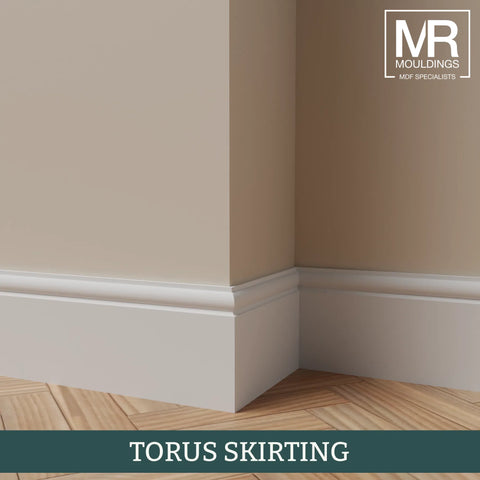
Torus is one of the most widely used skirting board profiles in the UK - a single convex arc that runs across the face of the board and produces a clean, rounded shadow line at floor level. Less ornate than ogee, more characterful than a flat pencil round, it sits comfortably in Victorian and Edwardian properties and works just as well in newer houses where a quietly traditional profile is preferred over something strictly contemporary.
We mill our torus skirting boards from MDF at our workshop in Epsom. Available in torus type 1 and type 2 profiles across a full range of heights. Cut to your exact length and supplied primed.
Victorian Skirting Boards | Ogee Skirting Boards | Lambs Tongue Skirting Boards


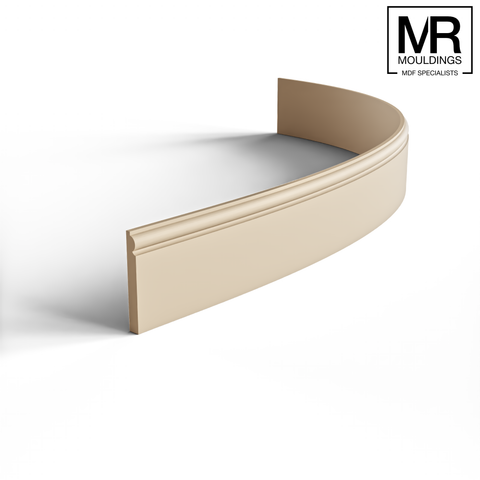
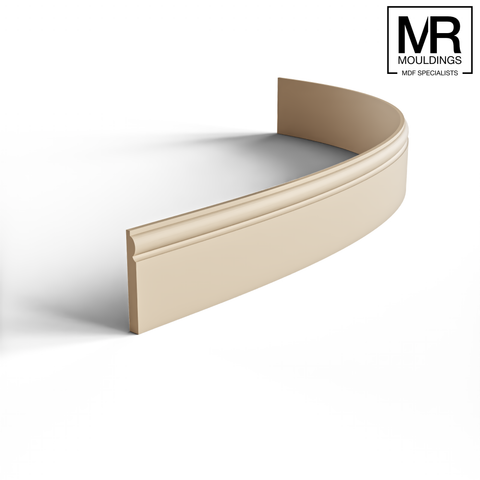
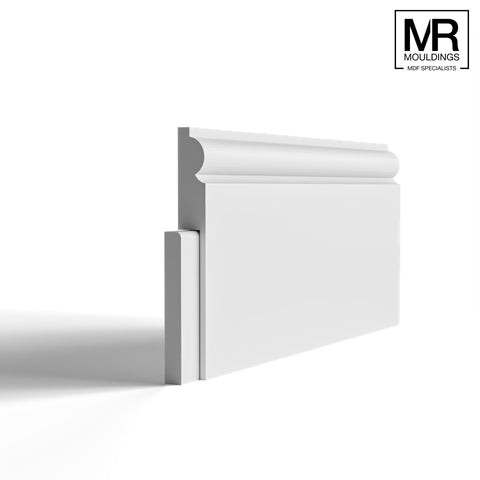

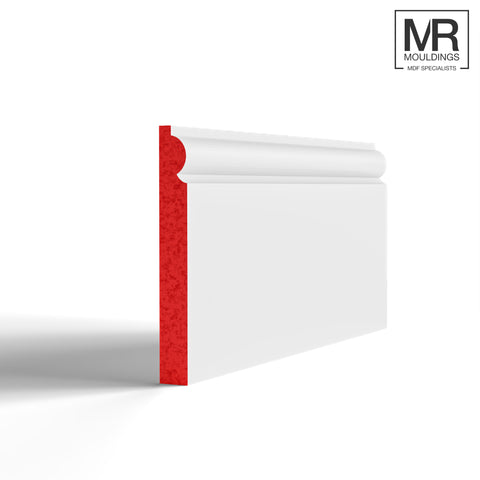
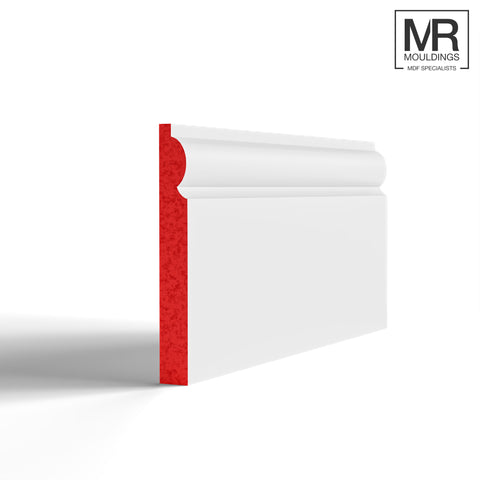
The torus profile takes its name from the architectural term for a large convex moulding - a half-round or near-half-round shape in cross-section. On a skirting board, that convex curve runs across the upper face of the board, creating a pronounced rounded edge that catches the light and reads clearly from across a room. Below it the board face is flat, which keeps the overall effect clean and unfussy.
It is a profile with a long history in British domestic architecture. Torus skirting appears in Victorian and Edwardian properties throughout the country - often in rooms where the detailing was restrained rather than elaborate, or in secondary rooms where ogee would have been considered too heavy. Its versatility is its main strength: it suits period properties without looking out of place in a newer house, and it pairs with both traditional and contemporary door furniture without creating a visual mismatch.
We supply torus in two profile variants. Torus type 1 has the standard convex arc - the profile most people mean when they refer to a torus skirting board. It is the most common specification for both renovation and new build work.
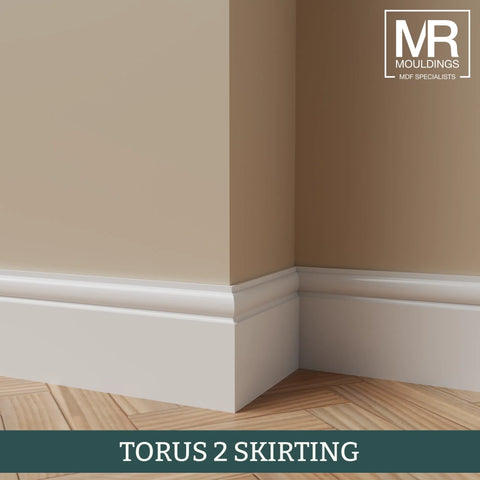
Torus type 2 has a slightly different face - a more pronounced curve with a small flat section at the top before the arc begins, giving it a marginally more detailed appearance. Both read clearly as torus profiles; type 2 is the right choice when you are matching existing boards that have that additional detail, or when you want a slightly more considered finish than the standard profile. If you are unsure which type matches your existing skirting, send us a photograph or measurement and we will advise.
Height matters as much as profile with torus skirting. The rounded face is relatively simple in detail, which means the visual weight of the board comes largely from its height rather than its moulding. In a room with standard 2.4m ceilings, 145mm to 170mm is a good starting point - tall enough to anchor the wall properly without dominating it. In Victorian and Edwardian properties with higher ceilings, larger boards were standard: 195mm to 220mm was common in main reception rooms, and taller still in grander properties.
A board that is too short looks like an afterthought regardless of profile. For a full breakdown of how to size skirting boards correctly for your ceiling height, see our skirting board height guide.
The choice between torus and ogee comes up regularly for anyone working in a period property. Both are authentic Victorian profiles; the difference is in their character. Ogee is the more decorative of the two - its double S-curve face is elaborate enough to be a feature in its own right, and it suits reception rooms and properties where the joinery is a deliberate statement. Torus is simpler and more versatile - it works across a wider range of property types and room contexts without demanding the same level of commitment from the rest of the scheme.
If you are extending an existing run, the decision is made for you - match what is already there. If you are starting from scratch in a period room, a useful guide is to look at what the original cornices and door furniture look like. Heavy, elaborate detailing throughout the room points toward ogee; restrained or moderate detailing points toward torus. Our ogee vs torus guide covers the decision in detail.
Torus skirting should be paired with matching torus architrave for a consistent joinery scheme throughout the room. Mixing torus skirting with ogee architrave - or with a flat modern profile - creates an inconsistency that is noticeable even if you cannot immediately identify the reason. We supply torus architrave in the same profiles as the skirting, cut to the same specification, so the room reads as a coherent whole. Our Victorian skirting boards hub covers the full period range if you are also considering ogee or lambs tongue alongside torus.
Victorian Skirting Boards | Ogee Skirting Boards | Lambs Tongue Skirting Boards | Torus Architrave | Skirting Board Height Guide | Ogee vs Torus Guide
The common questions, answered — so you order the right profile first time.
A torus skirting board has a single convex arc running across the upper face of the board - a rounded, half-round shaped profile that creates a clean shadow line at floor level. It is one of the most widely used skirting board profiles in the UK, appearing in Victorian and Edwardian properties throughout the country and remaining a popular choice for both period renovation and new build work today.
Torus type 1 is the standard profile - a clean convex arc across the face. Torus type 2 has a slightly more pronounced curve with a small flat section at the top before the arc begins, giving it a marginally more detailed appearance. Both read clearly as torus profiles; type 2 is the right choice when you are matching existing boards that have that additional detail, or when you want a slightly more considered finish than the standard profile.
Torus is cleaner and more versatile - it works across a wide range of period and modern properties without the same decorative commitment as ogee. Ogee is more elaborate, with a double S-curve profile that suits reception rooms and properties where the joinery is a deliberate feature. If you are matching existing boards the choice is made for you. If you are starting from scratch in a period room, the character of the rest of the room's detailing is the best guide. Our ogee vs torus guide covers the decision in detail.
For rooms with standard 2.4m ceilings, 145mm to 170mm is a reliable starting point. In Victorian and Edwardian properties with higher ceilings, 195mm to 220mm was the original specification for main reception rooms. As a general rule, err toward taller rather than shorter - a board that is too small for the room reads as an afterthought regardless of profile. See our skirting board height guide for a full breakdown by ceiling height.
Yes. Torus skirting should be paired with torus architrave for a consistent joinery scheme throughout the room. Mixing torus skirting with a different profile on the doors and windows creates a visual inconsistency that undermines the whole scheme - even if it is not immediately obvious what is wrong.