





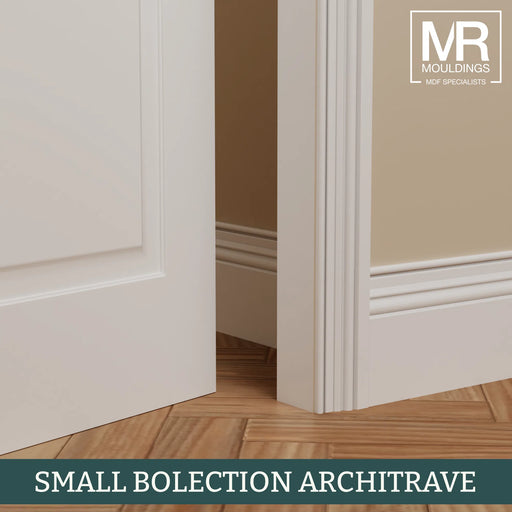

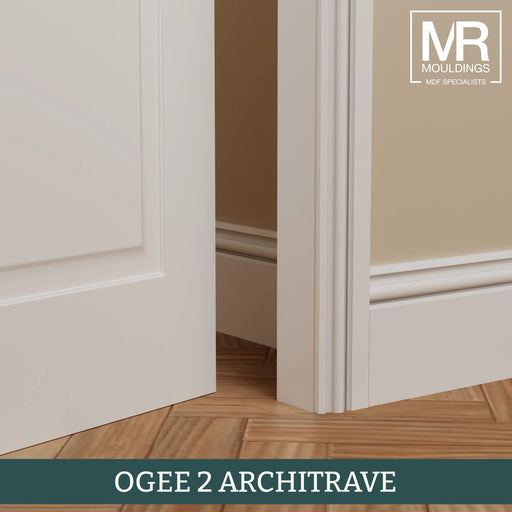

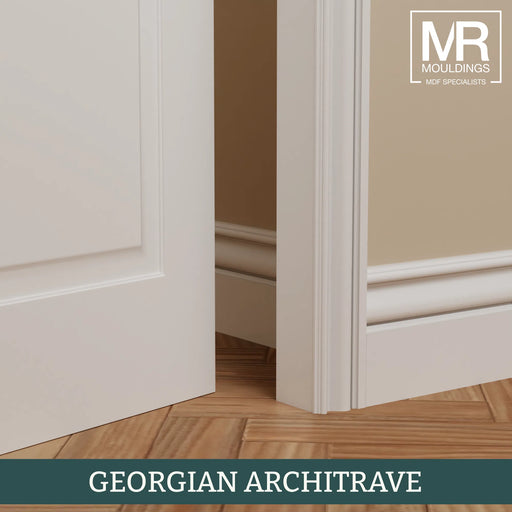

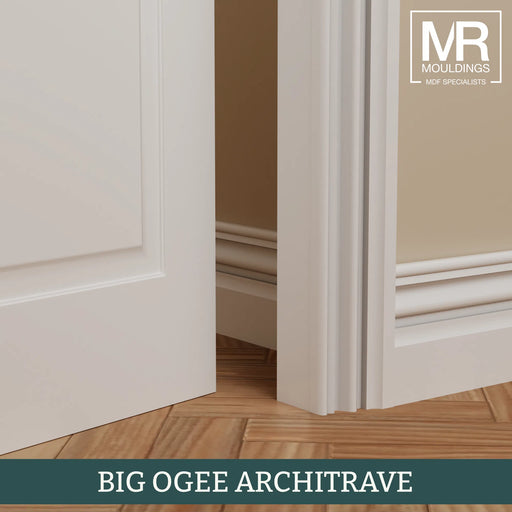









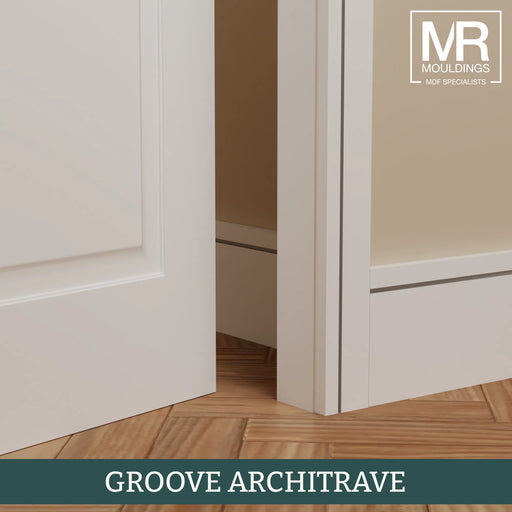

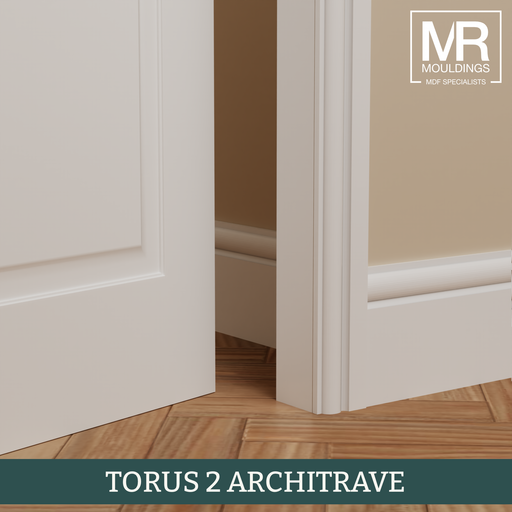

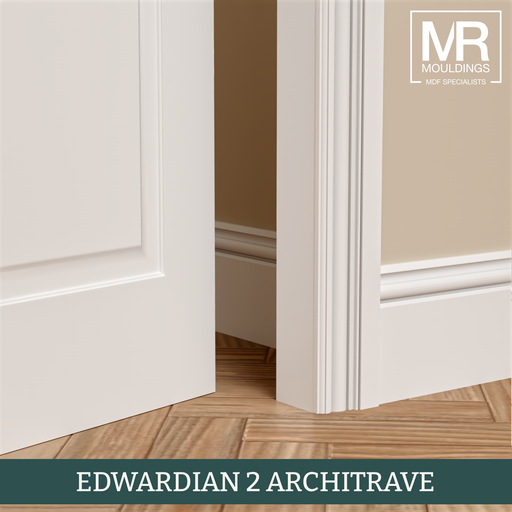

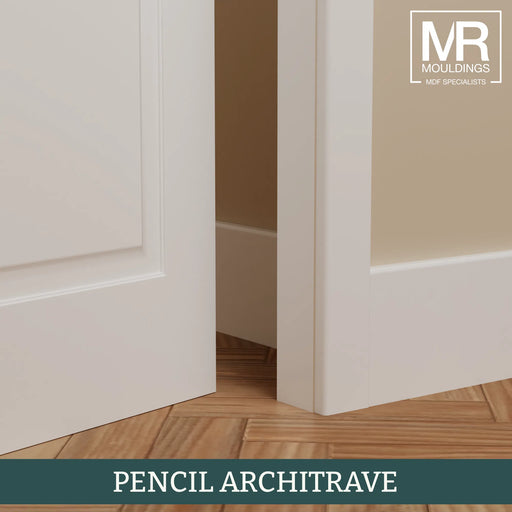







What is an architrave?
Architrave is a fixed moulding applied around a door or window opening after the lining is installed. Its practical job is to cover the gap between the lining and the plaster - a joint that would otherwise be visible and prone to cracking as the building moves. Beyond that it is a finishing element: the profile, height and finish of the architrave sets the tone for the room's joinery in the same way the skirting board does at floor level.
In period properties, architrave was specified as part of a complete joinery scheme - ogee or torus profiles on the doors and windows, matching skirting below, cornice above. The consistency of those profiles across a room is what gives a well-restored Victorian or Edwardian interior its coherence. In contemporary new builds the same principle applies, just with simpler profiles: square edge or pencil round architrave throughout, matched to the skirting, reads as considered and complete.
Victorian and period profiles
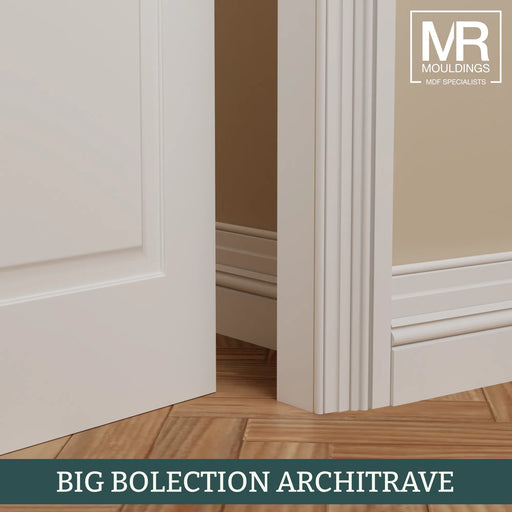
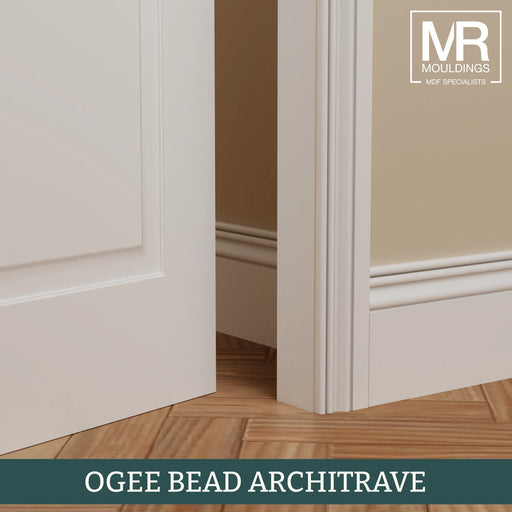
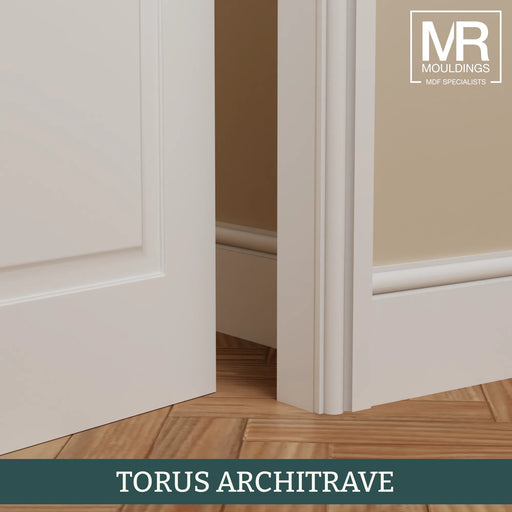
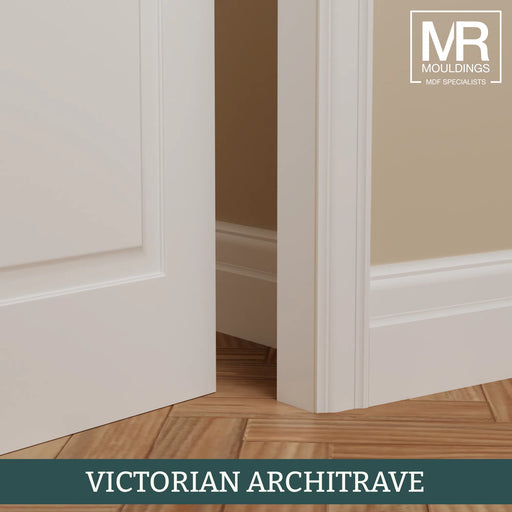
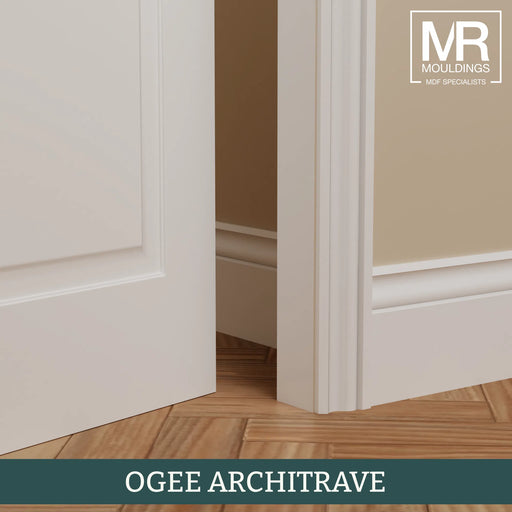
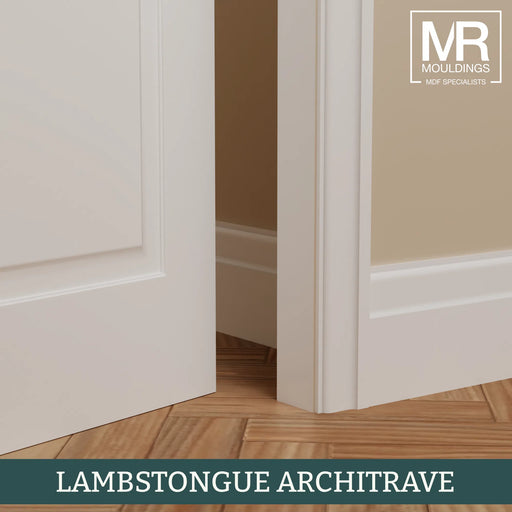
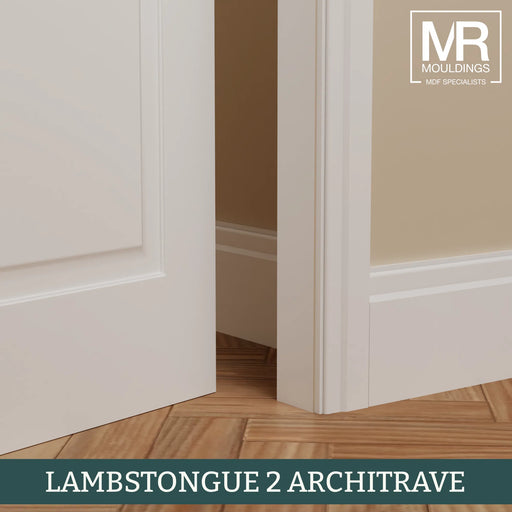
Our Victorian architrave range covers the three profiles most associated with period properties: ogee, torus and lambs tongue. Ogee is the most decorative, with its characteristic double S-curve face. Torus is cleaner - a single convex arc that works across Victorian and Edwardian properties alike. Lambs tongue is the most understated of the three, suited to secondary rooms or properties where the detailing is restrained throughout. All three are designed to match our Victorian skirting boards so the joinery reads consistently room to room.
Modern and contemporary profiles
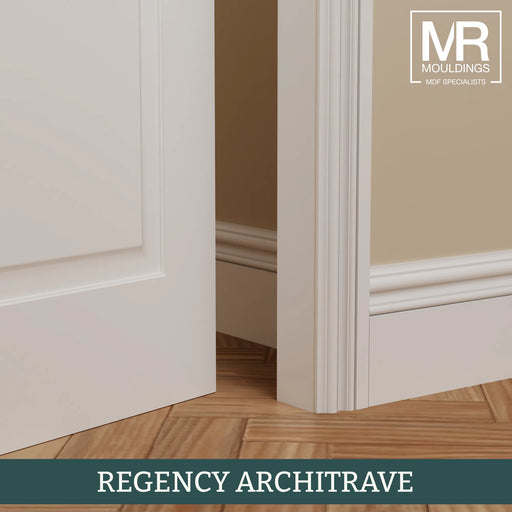
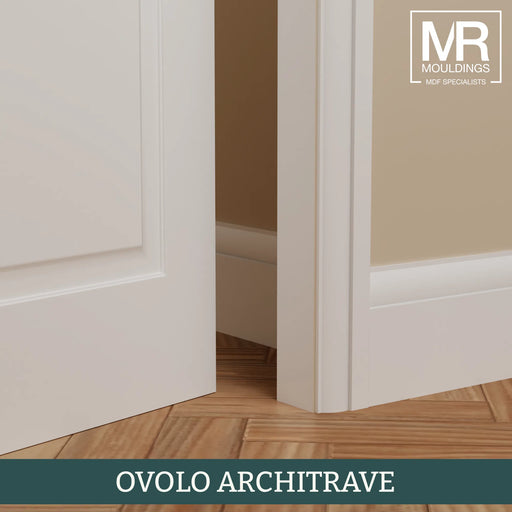
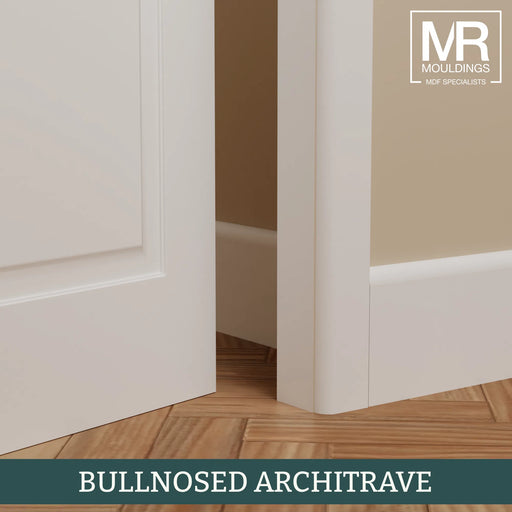
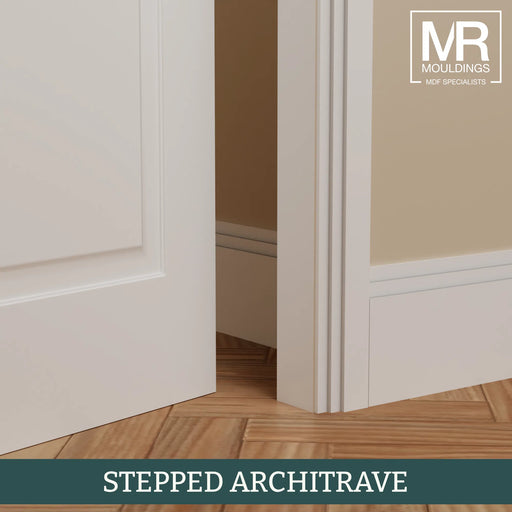
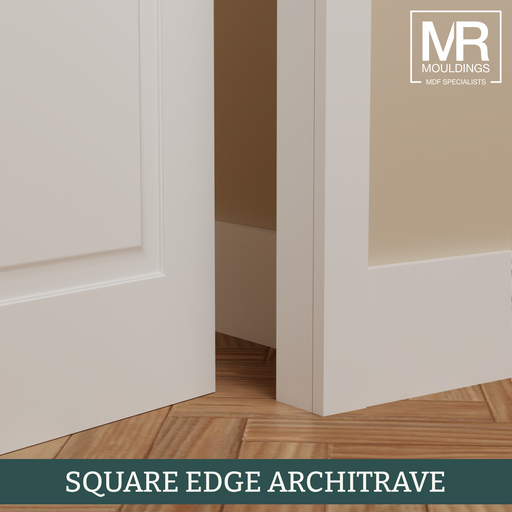
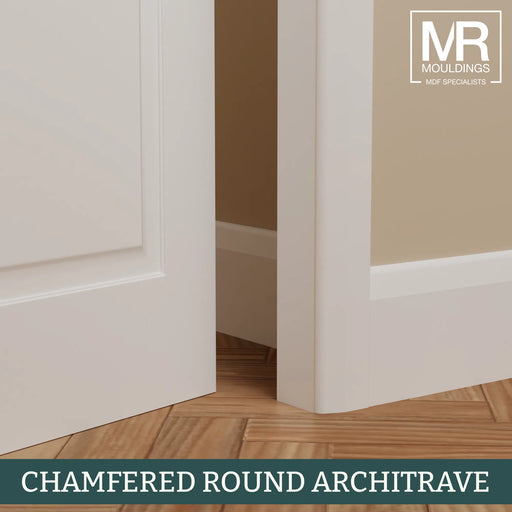
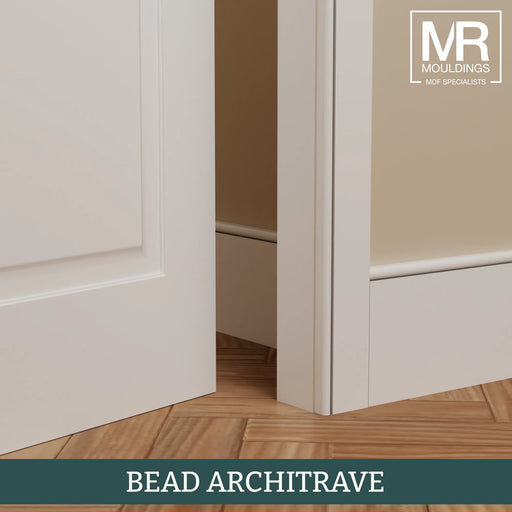
Our modern architrave range covers the flat and simply shaped profiles suited to contemporary interiors: bullnose, pencil round, square edge, chamfered, ovolo and stepped. The same profiles available in our modern skirting boards range, so matching across a room is straightforward. For a completely minimal installation, square edge architrave fixed with a tight caulked joint gives a clean, uninterrupted line around the opening with no historical reference.
Flexible architrave for curved openings
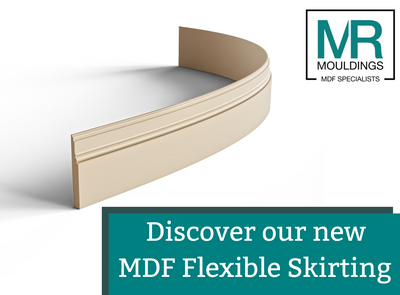
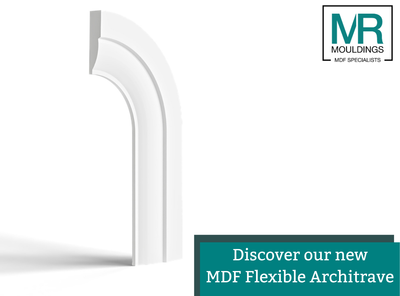
Standard MDF architrave runs in straight lengths and is mitred at corners. For arched doorways, curved openings or any frame that is not a standard rectangle, our flexible architrave is manufactured to bend to the wall line. Arched internal doorways are the most common application - the architrave follows the curve of the arch rather than stepping across it in segments. If you are unsure whether your opening requires the flexible version, send us the dimensions and we will advise.
Fire rated architrave
For commercial buildings, HMOs, hotels and any project where the specification calls for fire rated materials, our fire rated MDF architrave is manufactured from FR MDF board. Profile and finish are identical to the standard range. If your project specification requires FR materials throughout, we also supply fire rated versions across our skirting board and cornice ranges.
Architrave covers
If you are renovating a room where the existing architrave is damaged, poorly fitted or simply the wrong profile, architrave covers fix directly over the top without requiring the original to be removed. They are cut slightly wider than the existing architrave and sit flush over it, giving a clean new face without the disruption of a full strip-out. A practical solution for rental properties, phased renovations or rooms where removing the original would risk damaging the plaster.
Specialist ranges
Beyond the main Victorian and modern collections, we supply a number of specialist ranges for specific project requirements. Our thin architrave suits rooms where the reveal between the door lining and the wall is shallow - a common constraint in modern construction where partitions are thinner. Bathroom architrave is produced from moisture-resistant MDF for rooms that see regular steam. Tall architrave is available for door openings where standard heights do not provide sufficient cover. And our reeded architrave offers a textured, ridged face profile for interiors where the detailing is a deliberate design feature.
Architrave for windows
The same profiles apply to window openings as to doors - the architrave frames the window lining and covers the plaster joint in exactly the same way. In period properties it is common for window and door architrave to be specified identically throughout a room. In contemporary interiors some schemes omit window architrave entirely in favour of a reveal finish, but where architrave is used it should match the door profiles for visual consistency.
Matching architrave with skirting boards
Architrave and skirting boards should be specified together. In a period room, ogee architrave with ogee skirting, torus with torus. In a contemporary room, square edge with square edge, bullnose with bullnose. Mixing profiles across the same room rarely reads well. Our skirting boards range mirrors the architrave range across both Victorian and modern profiles, so matching is straightforward. Our architrave blocks provide a clean transition between the two where they meet at floor level, avoiding the need for a mitre or scribe joint.
Victorian Architrave | Modern Architrave | Flexible Architrave | Fire Rated Architrave | Architrave Covers | Thin Architrave | Bathroom Architrave | Reeded Architrave