Skip to content



MDF vs Hardwood Mouldings in Period Properties: What Actually Works Best?

Choosing the right mouldings for a period property is rarely straightforward. Homeowners often assume that traditional timber is the only appropriate option, while MDF is sometimes dismissed as unsuitable for older homes. In reality, the decision is more nuanced.
This guide compares mdf moulding and hardwood mouldings in period properties, focusing on durability, cost, finish and sustainability. The aim is to help you choose the option that performs best in real homes, not just in theory.
At MR Mouldings, we supply mouldings designed for both traditional and modern interiors, giving homeowners reliable options when restoring or upgrading period properties.
Understanding MDF and Hardwood Mouldings
Before comparing performance, it is important to understand what each material actually is.
What Is MDF Moulding?
MDF moulding is made from wood fibres bonded under pressure to create a dense, uniform material. Unlike solid timber, MDF has no grain direction, which gives it predictable performance and a consistently smooth surface.
What Are Hardwood Mouldings?
Hardwood mouldings are made from solid timber, typically sourced from species such as oak, tulipwood or sapele. They have a natural grain and are often associated with traditional craftsmanship.
Both materials can be used successfully in period homes, but they behave very differently once installed.
Durability in Period Properties
Durability is one of the most important considerations in older homes, particularly where walls and floors are rarely perfectly straight.
MDF Mouldings
In period properties, MDF mouldings often outperform timber because they:
-
Do not warp, twist or split with changes in temperature
-
Remain straight over long runs
-
Perform consistently on uneven walls
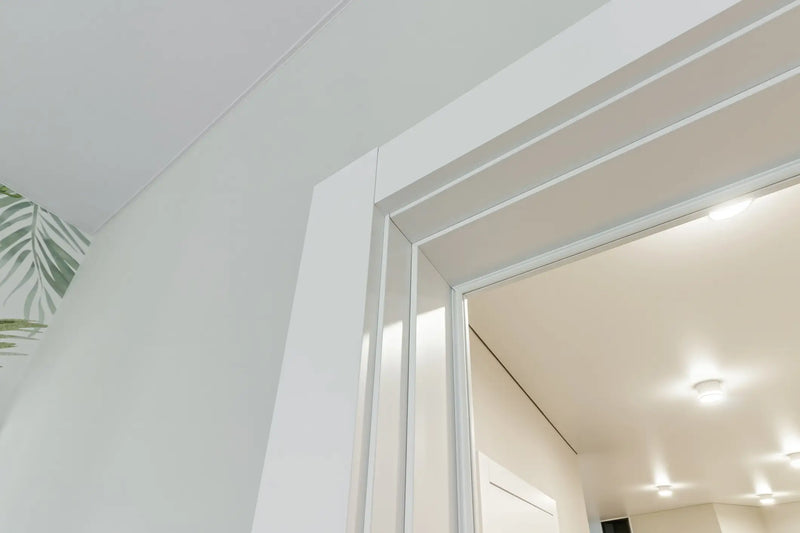
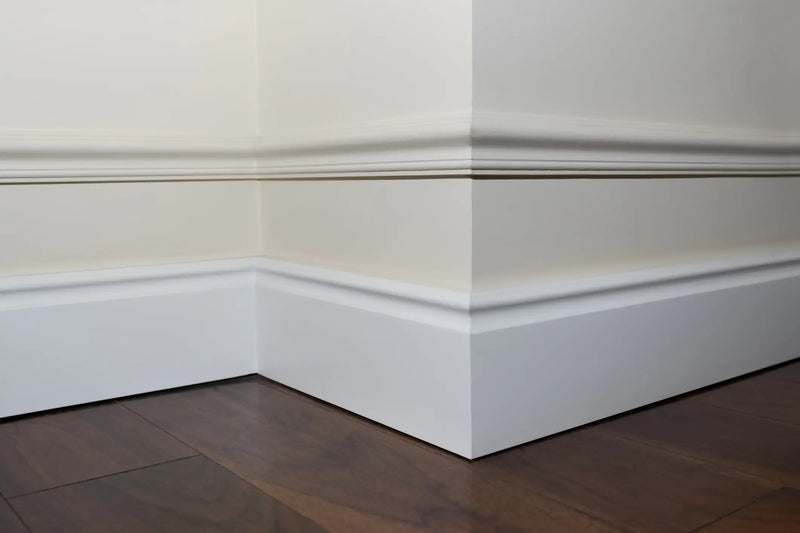
This makes MDF particularly effective for skirting boards and architrave, where clean lines are essential.
Hardwood Mouldings
Timber mouldings are durable in the right conditions but can be less forgiving in older properties. Movement caused by humidity changes may lead to:
-
Small gaps opening at joints
-
Warping over time
-
Cracking paint finishes
In homes with fluctuating conditions, this can result in additional maintenance.
Finish and Visual Quality
For most period interiors, mouldings are painted rather than left natural, which makes finish quality a key factor.
MDF Finish
MDF mouldings provide:
-
A smooth, knot free surface
-
Crisp profile detailing
-
Excellent results with modern paints
This makes MDF ideal for achieving the refined, understated finishes typical of Georgian and Edwardian interiors.
MR Mouldings’ MDF Mouldings are precision machined to ensure clean lines and consistent detail throughout a property.
Hardwood Finish
Hardwood mouldings can look excellent when stained or left natural, but painted timber often shows:
-
Visible grain texture
-
Knots bleeding through paint
-
Minor imperfections over time
In period homes aiming for a clean painted look, this can detract from the overall finish.
Cost Considerations
Budget plays a significant role in restoration and refurbishment projects.
MDF Mouldings
MDF mouldings are generally more cost effective due to:
-
Lower material costs
-
Reduced waste
-
Faster installation
This allows homeowners to invest in taller skirting boards or more detailed profiles without exceeding budget.
Hardwood Mouldings
Hardwood mouldings are typically more expensive, particularly for larger profiles. Installation may also take longer due to the need for additional preparation and finishing.
For whole house projects, the cost difference can be substantial.
Sustainability and Environmental Impact
Sustainability is increasingly important when choosing building materials.
MDF and Sustainability
Modern MDF is manufactured using wood fibres from managed sources, often utilising products that would otherwise go to waste. This makes MDF an efficient use of timber resources.
MR Mouldings’ MDF products are designed to balance performance with responsible sourcing.
Hardwood and Sustainability
Hardwood mouldings rely on solid timber, which can place greater pressure on forests if not carefully managed. While responsibly sourced hardwood is available, it is generally less resource efficient than MDF.
For homeowners prioritising sustainability, MDF is often the more practical option.
Performance on Uneven Walls
Uneven walls are common in period properties and can make moulding installation challenging.
MDF mouldings perform particularly well because:
-
They are easier to scribe
-
They maintain straight lines against imperfect surfaces
-
They reduce the need for excessive filler
This is especially important for Skirting Boards, where gaps are highly visible once painted.
Using MDF Mouldings in Period Interiors
A common concern is whether MDF mouldings look appropriate in traditional homes. When chosen correctly, MDF profiles can replicate period detailing extremely well.
MDF mouldings are well suited to:
-
Georgian interiors with restrained detailing
-
Edwardian homes with subtle curves
-
Period properties where walls are not perfectly straight
The key is selecting profiles that reflect traditional proportions rather than overly modern designs.
Where Hardwood Still Has a Place
Hardwood mouldings can still be appropriate in certain situations, particularly where:
-
A natural wood finish is required
-
Original features are being carefully matched
-
Small areas are being repaired rather than replaced
However, for full room refurbishments or whole house upgrades, MDF often delivers a more consistent and reliable result.
Choosing the Right Mouldings for Your Property
When deciding between MDF and hardwood mouldings in a period property, consider:
-
Wall condition and straightness
-
Desired finish
-
Budget and scope of work
-
Long term maintenance expectations
For many homeowners, MDF mouldings provide the best balance of performance, appearance and value.
MR Mouldings supplies a wide range of MDF Mouldings, including Skirting Boards and Architrave, designed to work together and suit period interiors.
Final Thoughts
There is no one size fits all answer when comparing MDF and hardwood mouldings, but in most period properties, MDF mouldings offer clear advantages in durability, finish, cost and sustainability.
When chosen thoughtfully, MDF mouldings can enhance traditional interiors while providing the reliability required for modern living.
If you are planning a restoration or refurbishment project, explore the moulding ranges available from MR Mouldings to find solutions that respect the character of your property while delivering long term performance.