





What is Tongue and Groove Cladding?
Tongue and groove cladding - also referred to as TGV cladding or interior wall cladding - is a system of interlocking boards where a protruding tongue on one board slots into a corresponding groove on the next, creating a tight, seamless join with no visible fixings. The result is a clean, continuous wall surface with a subtle linear texture that works in both contemporary and traditional interiors.
Unlike natural timber cladding, MR Mouldings' pre-primed MDF tongue and groove cladding will not warp, split, or move with changes in temperature or humidity. It is dimensionally stable, smooth-faced, and ready for any water-based or oil-based decorator's paint.
Browse our MDF cornices and picture rails to add the finishing details above the cladding run.
Where to Use Tongue and Groove Cladding
Internal wall cladding is one of the most versatile interior upgrades available. It works at full wall height for a dramatic statement, or at dado height for a more traditional half-wall treatment. Common applications include:
Hallways - tongue and groove cladding gives a hallway instant character and a sense of quality from the moment you step through the door. A half-wall run at dado height with a dado rail capping the top is one of the most popular combinations.
Bathrooms and wet rooms - MDF interior cladding must be sealed and painted correctly for bathroom use. A moisture-resistant primer coat followed by two coats of bathroom paint provides a durable, wipeable finish. Full-wall vertical runs work particularly well in narrow bathroom spaces.
Living rooms and dining rooms - floor-to-ceiling tongue and groove cladding as a feature wall behind a sofa or dining table is one of the most searched interior inspiration ideas in the UK right now. Pair with wall panelling on adjacent walls for a layered, considered finish.
Why MDF for Interior Cladding?
Natural timber cladding moves. As temperature and humidity change, timber expands and contracts - causing gaps between boards, paint cracking at the joints, and warping over time. MDF does none of this. It is manufactured to be dimensionally stable, which means boards stay tight, paint stays intact, and the wall surface remains flat years after installation.
Pre-primed means the surface is sealed and ready for your topcoat. No additional priming, no sanding, no preparation step between delivery and painting.
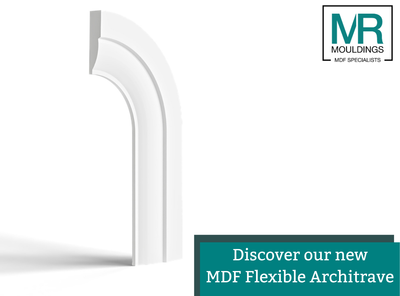
For skirting boards and architrave to match your cladding scheme, browse our full skirting board range and architrave collection.
How to Fit Tongue and Groove Cladding
Tongue and groove cladding can be fitted horizontally or vertically, depending on the desired effect. Vertical boards draw the eye upward, making rooms feel taller. Horizontal boards create a more contemporary, linear look and are particularly effective in open-plan spaces.
Fix boards directly to the wall surface using grab adhesive and panel pins through the tongue of each board, concealing the fixing as the next board slots into place. Start from a plumb vertical or level horizontal line and work outward. Finish the top edge of a half-wall run with a dado rail or cladding trim, and the bottom edge with a skirting board to complete the scheme.