




What is Reeded Moulding?
Reeded moulding - also referred to as reed moulding - features a series of parallel convex ridges machined along the face of the board. The profile takes its name from the natural reed plant, whose cylindrical stems the ridges resemble when grouped together. It is the mirror image of fluted moulding, which cuts concave grooves into the face rather than raising convex ridges from it.
In interior design, reeded profiles add a layer of visual texture that flat mouldings cannot achieve. Used as architrave, as panel moulding strips on a feature wall, or as a decorative skirting profile, reeded moulding introduces depth and detail that reads as considered and deliberate rather than decorative for its own sake.
Browse our beading collection for related decorative moulding profiles.
Reeded Architrave
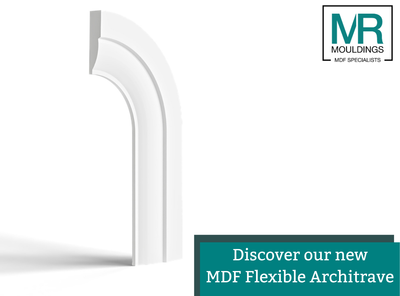
Reeded architrave brings decorative texture to door frames that standard flat or torus profiles cannot match. The parallel ridges running the length of each leg and head create a strong vertical line that suits both period and contemporary interiors - particularly effective in rooms where the walls are painted in deep or bold colours, where the textured profile catches the light and adds dimension.
Available in standard and double reed profiles. Pre-primed MDF throughout - no grain interrupting the ridge detail, no knots breaking the line.
Pair with our plinth blocks and rosettes at the base of the door frame for a fully considered surround.
Reeded Panel Moulding
Used as panel moulding strips on a feature wall, reeded moulding creates a textured surface that works as a complete wall treatment in its own right - without the need for a full panelling framework. Fix strips vertically or horizontally, evenly spaced, and paint the wall and mouldings in the same colour for a seamless, tonal finish that has become one of the most-shared interior looks on social media.
Works alongside our wall panelling and dado rails for a more structured panelled scheme.
Reeded Skirting
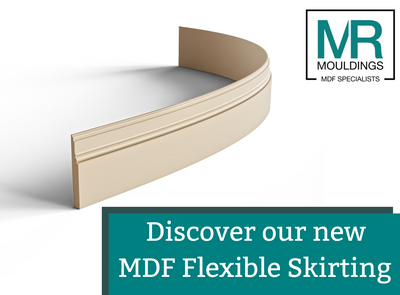
Reeded skirting adds the same textured profile at floor level, creating a consistent decorative language throughout a room when used alongside reeded architrave. Particularly effective in hallways and living rooms where the skirting height is generous enough for the reed profile to make an impact.
Browse our full skirting board range for complementary profiles.
Why MDF for Reeded Moulding?
Pine reed moulding has been the standard for decades - but pine has a grain, and grain interrupts the clean parallel ridge detail that makes reeded profiles distinctive. On a painted finish, pine grain bleeds through undercoat, requires additional sanding between coats, and can telegraph knots through even a well-applied topcoat.
MDF has none of these characteristics. The face is smooth, consistent, and grain-free - which means the ridge profile reads exactly as machined, paint adhesion is even across the entire surface, and the finished result looks precise rather than handmade. For any painted interior application, MDF is the correct material for reeded moulding.
For the complete painted interior moulding range, browse our cornices and picture rails.
How to Fix Reeded Moulding
Reeded moulding is fixed in the same way as any standard moulding profile. Apply grab adhesive to the back face, press firmly into position, and secure with panel pins while the adhesive sets. Fill pin holes, caulk the edges where the moulding meets the wall or frame, sand lightly if required, and apply your chosen topcoat. The pre-primed surface means no additional priming step is needed before painting.