




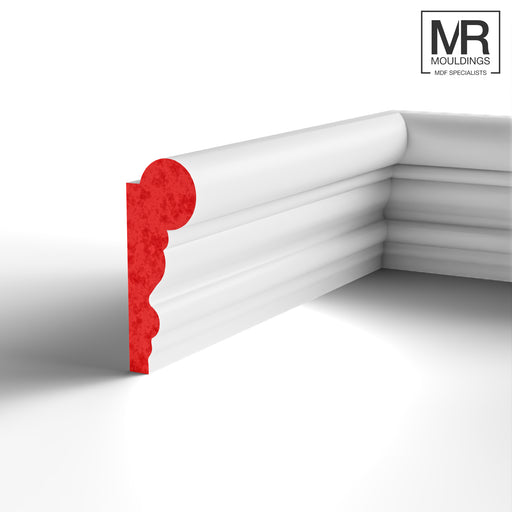
What is a picture rail?
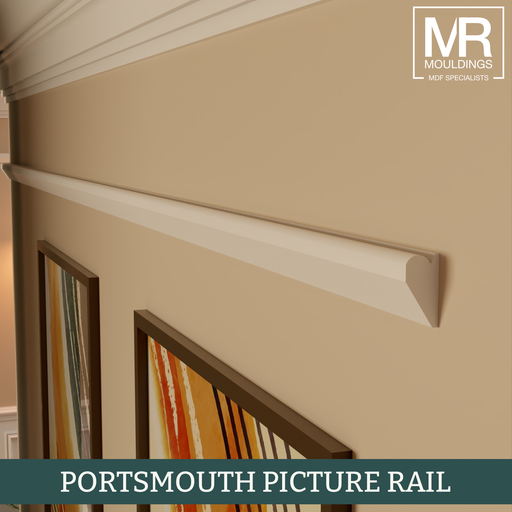
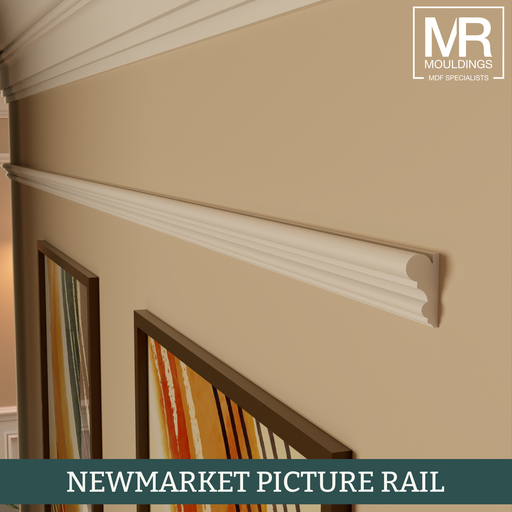
A picture rail is a narrow horizontal moulding fixed to the wall close to the ceiling, with a curved or chamfered upper edge designed to accept a small metal hook. The hook sits over the rail; a wire or cord drops from it down to the frame. Because the fixing point is at the top of the wall, nothing is driven into the plaster in the main field of the room. You can hang, remove and reposition artwork without leaving a mark.
In Victorian and Edwardian properties, picture rails were fitted as standard and typically formed part of a three-part horizontal system running around the room: cornice at ceiling level, picture rail just below it, dado rail at mid-height. That system gave rooms their proportions. A lot of period renovations involve reinstating it - usually because someone removed the rails at some point and the walls have felt flat ever since.
In modern interiors, they serve a different purpose. Renters who can't put holes in walls, owners working with lime plaster that won't hold a nail reliably, or anyone who wants the freedom to change a room's art arrangement without redecorating: picture rails solve all three problems with a single fixed moulding.
Which picture rail profile is right for your room?
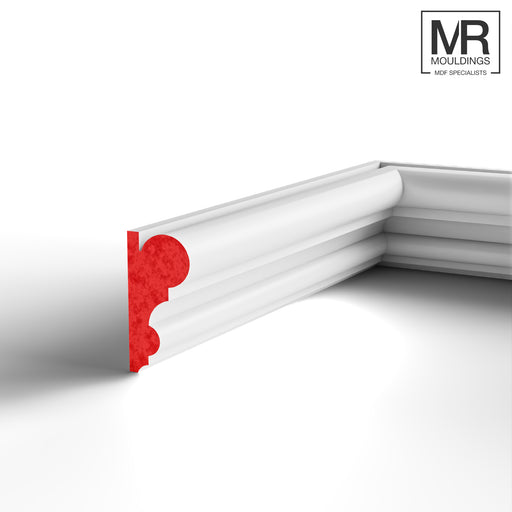
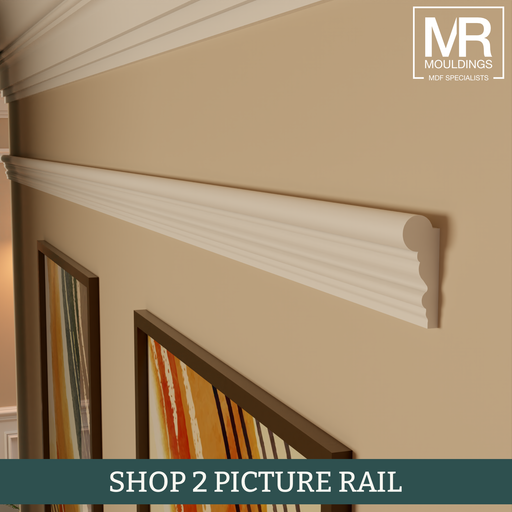
The Victorian profile has a rounded upper edge and a gently stepped face - the shape you'll recognise from original period rails, and the right choice for any property where the architecture has a traditional character. If you're matching existing original rails in a section of room, send us the dimensions and we can advise on the closest match.
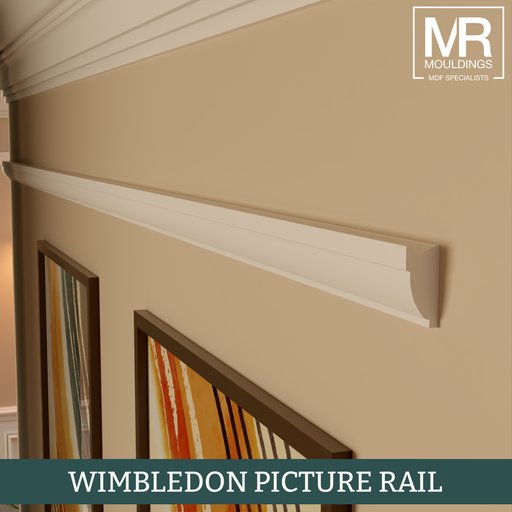
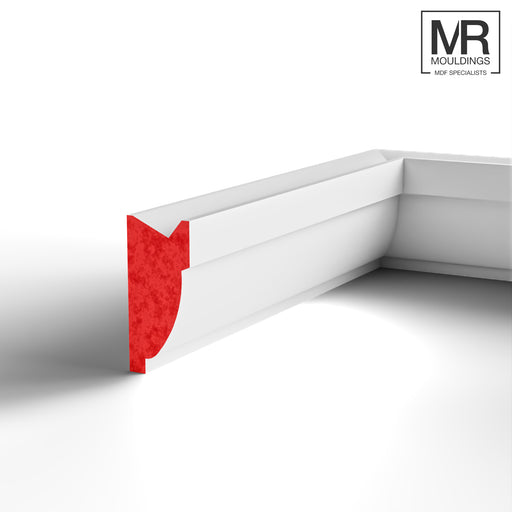
The modern profile is flatter and less ornamented, suited to interiors where the detailing is clean and minimal. It still functions identically - same hook compatibility, same fixing method - but it doesn't read as period in a room where that would look out of place.
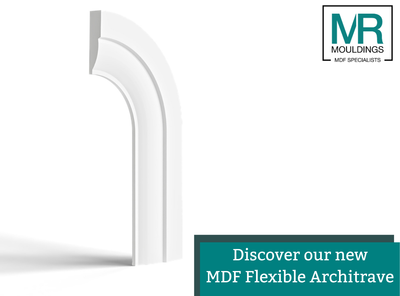
The flexible picture rail uses the same profiles but is manufactured to bend. Bay windows are the most common application - the rail follows the wall line through each facet rather than cutting across it. Curved alcoves and bow-fronted rooms are other frequent uses. If you're not sure whether your wall requires the flexible version, measure the radius of the curve: anything below about 3 metres radius will usually need it.
For commercial buildings, HMOs or any project where the specification calls for fire rated materials, our FR MDF picture rails are produced from fire rated MDF board. The profile and finish are identical to the standard range; the material meets the relevant fire performance requirements.
Picture rails and wall panelling
One of the most common uses we see at the moment is fitting a picture rail at the top of a wall panelling scheme. The rail caps the installation, creates a shadow line at ceiling level, and gives the whole scheme a finished top edge that reads as deliberate rather than added on. It's a detail that interior designers have been specifying heavily in new builds for the past few years - the kind of thing that pulls a room together.
If you're planning a panelled wall, a picture rail at the top pairs naturally with a dado rail lower down and wall panelling filling the zone in between. The result is a room with genuine horizontal structure rather than just product on a wall.
Where to fix a picture rail
The traditional position is 300-600mm below the ceiling, which in a typical Victorian room lands at around 2.1-2.4m from the floor. In rooms with lower ceilings, aligning the rail with the tops of door frames gives a consistent horizontal reference the eye reads as intentional. For a full breakdown by ceiling height, including how to handle a staircase run, see our picture rail height guide.
Fix through the moulding directly into the wall. On masonry, use wall plugs at 600mm centres. On timber-framed walls, fix into the studs. Most installations also use a bead of construction adhesive behind the moulding, which takes the tension off the fixings and eliminates any movement over time.
MDF vs timber for picture rails
Original period picture rails are almost always softwood - pine, typically - because it was cheap, abundant and easy to machine during the Victorian building boom. The practical problem today is consistency: softwood moves with moisture and temperature, paint can crack along the grain over time, and profiles can vary if sections have been run through different tooling.
MDF behaves more predictably in a painted interior application. It machines to a consistent profile every time, takes primer cleanly across the full face without grain telegraphing through, and is dimensionally stable in normal conditioned spaces. We use it across our full mouldings range - skirting boards, architrave, dado rails and cornices - for exactly the same reasons.
Victorian Picture Rails | Modern Picture Rails | Flexible Picture Rails | Fire Rated Picture Rails | Dado Rails | Wall Panelling | Picture Rail Height Guide | Dado Rail vs Picture Rail