
Call us


Removing skirting boards in a period property requires care, patience and the right approach. Older homes often feature delicate plaster, uneven walls and historic materials that can be easily damaged if skirting boards are removed incorrectly. Whether you are restoring original features or upgrading to new skirting boards, knowing how to remove skirting boards properly will help protect your walls and ensure a clean professional finish.
To remove skirting boards safely in period homes, first score the paint line, then gently prise the board away near fixing points using a wide tool and wall protection. Work slowly along the length to avoid cracking plaster before preparing the wall for replacement skirting boards.
At MR Mouldings, we supply high quality MDF skirting boards and mouldings designed to suit both traditional and modern interiors. This guide explains how to remove skirting boards safely, how to protect period walls, and how to upgrade your skirting for a better long term result.
Period properties often differ significantly from modern construction. Walls may be finished with lime plaster rather than modern gypsum, and skirting boards are often fixed using a combination of nails, adhesive and layers of old paint. Removing skirting boards without the right technique can lead to cracked plaster, broken masonry edges or costly repair work.
Understanding the age and structure of your walls is the first step. Victorian, Edwardian and early twentieth century homes frequently have uneven walls and deeper skirting profiles, meaning removal needs to be gradual and controlled rather than forceful.
Using the correct tools makes a significant difference when learning how to remove skirting boards safely.
Recommended tools include:
A sharp craft knife or filling knife
A wide bolster chisel or pry bar
A hammer
Thin wooden wedges or offcuts
Dust sheets and masking tape
Safety gloves and eye protection
Avoid using excessive force or narrow pry bars that concentrate pressure in one area. This is one of the most common causes of wall damage in period homes.
Before attempting to prise anything away, use a sharp knife to carefully score along the top edge of the skirting board where it meets the wall. This breaks the paint seal and prevents large sections of plaster or paint lifting away with the skirting.
This step is essential in older homes where skirting boards may have been painted many times over decades.
Most skirting boards are fixed with nails into timber battens or directly into masonry. Gently tap along the skirting to locate nail positions. You may notice slight depressions or harder resistance where fixings are present.
Knowing where the fixings are allows you to apply pressure in the right places rather than levering blindly.
Insert a wide bolster chisel or pry bar behind the skirting board close to a fixing point. Use a small block of wood between the tool and the wall to spread pressure and protect the plaster.
Apply gentle pressure and work slowly along the length of the skirting, loosening it a little at a time. Avoid pulling from one end only, as this increases the risk of snapping the board or tearing the wall surface.
Once the skirting board is loose, pull it away from the wall carefully. Remove any remaining nails using a hammer or pliers. If nails are embedded in the wall, gently tap them back into the wall rather than pulling them straight out to reduce surface damage.
Wall protection is one of the most important aspects of removing skirting boards in older properties.
Key protection tips include:
Always use a spacer such as wood or thick cardboard between tools and the wall
Work slowly and evenly along the skirting board
Stop immediately if plaster begins to crack and reassess your approach
Expect some minor surface damage and plan for light filling and sanding
Even with care, small repairs are normal in period properties. The goal is to avoid deep cracks or large sections of blown plaster.
Once the old skirting boards have been removed, inspect the wall surface carefully. Remove old adhesive, fill small holes and sand the area smooth. This preparation stage is essential for achieving a clean professional finish with your new skirting boards.
At this stage, many homeowners choose to upgrade rather than reinstall old boards. New MDF skirting boards offer consistent profiles, smooth finishes and excellent durability while remaining suitable for period interiors.
Replacing old skirting boards is an opportunity to enhance the character of a period property rather than detract from it. Taller profiles, classic shapes and clean finishes can elevate a room while still respecting the original architecture.
Popular upgrade options include:
Traditional profiles such as ogee, torus and lambs tongue
Taller skirting boards to suit high ceilings
MDF skirting boards for stability and ease of finishing
Primed skirting boards ready for painting
MR Mouldings supplies a wide range of skirting boards designed to work seamlessly in period properties. Our MDF skirting boards are moisture resistant, straight and easy to fit, making them ideal for refurbishment projects where wall conditions are not perfectly uniform.
Not all skirting boards are fixed in the same way. Knowing what type you are removing helps reduce wall damage and makes the job easier.
Common in Victorian and Edwardian homes.
Key points:
Usually nailed in place
Often sealed with many layers of paint
Rigid and prone to pulling plaster away
Best approach:
Score the paint line thoroughly and work slowly along the board. Apply pressure close to fixing points and avoid bending the timber.
Recommended replacement for uneven walls:
Once removed, replacing old timber with MDF skirting boards from MR Mouldings is often more practical. MDF provides a straighter, more consistent finish on uneven period walls while still allowing you to choose traditional profiles such as ogee or torus.
Often found in refurbished period properties.
Key points:
Lighter and more uniform than timber
Frequently fixed with adhesive as well as nails
Can snap if forced
Best approach:
Ease the board away evenly along its length. Expect resistance from adhesive and apply steady pressure rather than sharp force.
Recommended replacement for uneven walls:
For properties with irregular walls, MR Mouldings’ primed MDF skirting boards are ideal. They are easy to scribe, sit neatly against imperfect plaster and arrive ready for painting, helping speed up installation.
Profiles such as ogee, torus or lambs tongue.
Key points:
Heavier boards put more strain on plaster
Deeper profiles increase leverage against the wall
Best approach:
Support the board as it loosens and work in short sections to reduce stress on the wall surface.
Recommended replacement for uneven walls:
In rooms with high ceilings and uneven walls, taller skirting boards in MDF work particularly well. The additional height helps disguise wall inconsistencies while maintaining period proportions.
Common in older properties with imperfect wall surfaces.
Key points:
Packed out or heavily filled behind
Plaster edges may be fragile
Best approach:
Proceed slowly and expect minor surface repairs. Careful removal will minimise visible damage.
Recommended replacement for uneven walls:
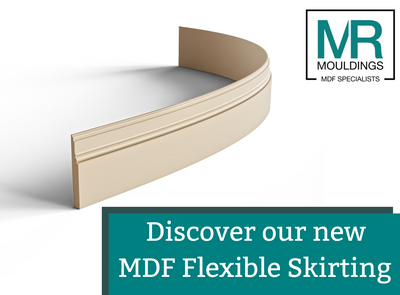
Where walls are noticeably uneven or curved, MR Mouldings’ flexible skirting boards are an excellent solution. They are designed to follow the contours of the wall, reducing gaps and minimising the need for excessive filler.
With years of experience supplying mouldings across the UK, MR Mouldings understands the challenges of working in older homes. Our products are precision machined for consistent quality and are available in a wide range of profiles, heights and finishes.
We offer:
High quality MDF skirting boards and mouldings
Profiles suitable for Victorian, Edwardian and 1930s homes
Primed options for quicker installation
Nationwide delivery and reliable customer support
Whether you are replacing damaged skirting boards or upgrading as part of a renovation, our range is designed to help you achieve a professional result.
Learning how to remove skirting boards correctly also means knowing what not to do.
Common mistakes include:
Forcing the skirting away in one movement
Skipping the paint scoring stage
Using narrow tools that damage plaster
Attempting removal without protecting the wall surface
Avoiding these issues will save time, reduce repair costs and preserve the character of your period property.
Removing skirting boards in period homes does not need to be risky or complicated. With the right tools, careful technique and an understanding of older wall construction, it is possible to remove skirting boards safely and prepare walls for an upgraded finish.
If you are planning to replace your skirting boards, explore the full range of skirting boards and mouldings available from MR Mouldings. Our products are designed to combine traditional style with modern performance, making them ideal for period properties across the UK.
For expert quality mouldings and reliable service, MR Mouldings is here to support your project from start to finish.