Skip to content



Hallway Ideas: How to Renovate and Elevate the Most Overlooked Room in Your Home

Your hallway is the first thing every guest sees when they walk through your door. It sets the tone for everything that follows: the warmth of your home, the care you put into it, the kind of space they're about to spend time in. And yet, for most people, it's treated as a purely functional gap between the front door and everywhere else.
That's changing. Hallway renovation is having a serious moment across Pinterest, Instagram and interiors media, driven by a growing awareness that this transient space has enormous potential. You don't walk through your hallway and linger, but you notice it every time. Your guests definitely notice it. And because it's one of the smallest rooms in the house, the investment required to transform it is relatively modest.
Whether you're in a new build that came with white walls and nothing else, a Victorian terrace with original features waiting to be restored, or something in between, this guide covers the ideas, the products and the approach that will turn your hallway into the part of your home you're genuinely proud of.
The hallway costs less to transform than almost any other room in the house. The impact, though, is felt every single day.
Why the Hallway Deserves More Attention Than It Gets
Interior designers talk a lot about first impressions, but it's usually in the context of kerb appeal or front doors. The interior hallway rarely gets the same treatment. This is partly because it's seen as transitional rather than functional, a space you pass through rather than inhabit.
But that framing undersells it. The hallway is the introduction to your home's personality. It tells guests whether the rest of the house will feel considered or chaotic, warm or clinical, characterful or forgettable. And because it's where people pause to take off coats and shoes, it's a space they actually register rather than blur past.
The best hallways do several things at once. They make the transition from outside to inside feel like an arrival rather than an entry. They offer warmth and welcome through colour, light and texture. And they hint at the design sensibility of the rest of the house without trying to replicate it. Getting that balance right starts with understanding what the hallway lacks by default and what relatively small changes can deliver.
In most UK homes, whether new build or period, those changes come down to three things:
-
Architectural detail. Flat walls and basic skirting give a hallway no visual structure. Panelling, dado rails and picture rails introduce the grid, depth and proportion that make a space feel designed.
-
Considered colour. White or magnolia is the default because it's safe. But the hallway is precisely the place where a bolder choice works best, because the room is small, naturally lit from front door glazing, and only occupied in passing.
-
Scale of mouldings. Tall skirting boards and a well-proportioned dado rail have a dramatic effect on how generous a narrow hallway feels. They draw the eye down, lengthen the wall visually, and make even modest proportions feel more deliberate.
What Pinterest Is Telling Us About Hallway Trends Right Now
Pinterest is one of the most reliable indicators of where interior design is heading, because people save things they genuinely intend to do rather than just admire. And right now, hallway ideas are among the most saved categories on the platform. Here's what's driving the most engagement:
Dark Paint Below the Dado Rail
Probably the single most pinned hallway treatment of the past two years. Painting the lower portion of the wall (below a dado rail, typically) in a deep, saturated colour, forest green, inky navy, warm charcoal, terracotta, while keeping the upper wall lighter or white creates a strong two-tone contrast that photographs exceptionally well and feels luxurious in person.
The dado rail itself is central to this look. It's not just a dividing line; it's an architectural feature that makes the contrast intentional rather than accidental. Without it, two-tone paint just looks unfinished. With it, it looks considered.
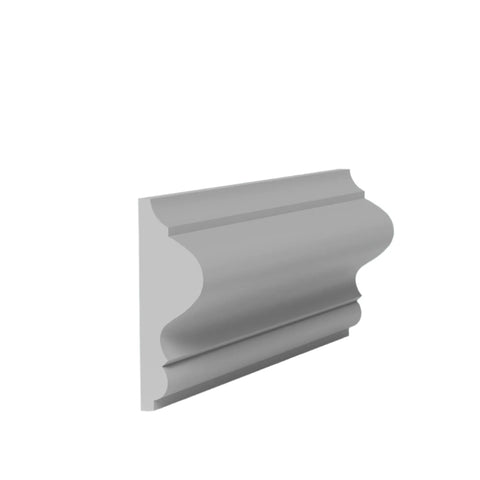
Browse the MR Mouldings dado rail range to find the right profile for your wall height.
Grid Panelling in Hallways
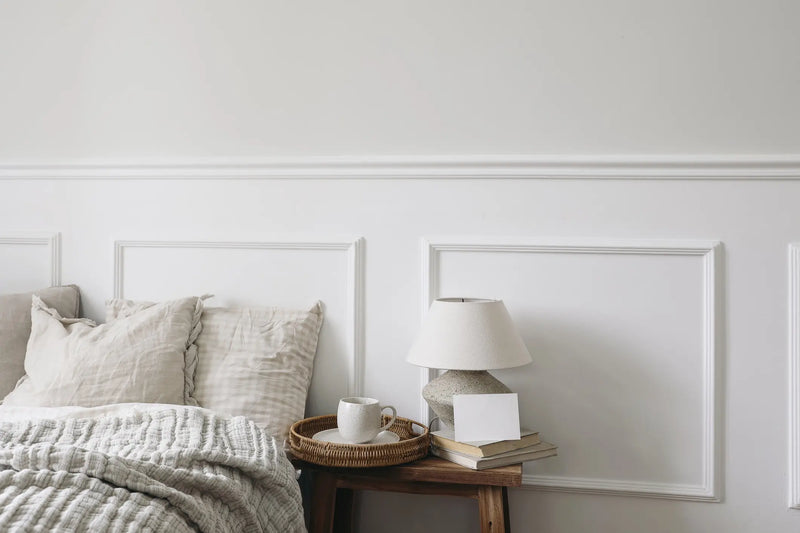
Applied grid or Shaker-style panelling in the lower half of the hallway wall is the second most popular treatment. It adds a layer of texture and depth that paint alone can't replicate, and it turns the hallway wall into something genuinely architectural. The key difference from other rooms is that in a hallway, the moulding detail is seen close-up, at short range, every single day. The quality of the profile and the finish of the paint both matter more here than in a living room viewed from across the room. For a full breakdown of panelling styles and profiles, see our wall panelling ideas guide.
Statement Lighting Over Everything Else
A pendant light or statement ceiling fitting in a hallway turns up in almost every high-engagement hallway pin. It's the detail that makes the difference between a space that's been styled and one that hasn't. Panelling and a good light fitting together are the combination that drives the most saves, because each amplifies the other. The moulding detail catches the light. The fitting gives the eye somewhere to travel vertically.
Mirrors as Architecture
Large, full-length or oversized mirrors are a staple of the aspirational hallway because they do two things simultaneously: they bounce light in a space that often has very little of it, and they extend the visual depth of a narrow corridor. The framing of the mirror increasingly reflects the moulding style of the panelling, creating a cohesive, designed feel.
The New Build Hallway Problem (and How to Solve It)
New build hallways present a specific and very common problem. Developers build to a price, and the hallway is where savings are most easily made. The result is almost always the same: a narrow white corridor with basic 67mm skirting boards, no cornice, no dado rail, no architectural detail of any kind. It's functional. It's also completely characterless.
The good news is that new build hallways are, paradoxically, among the easiest to transform. The walls are flat. The proportions are consistent. There are no layers of old paint or damaged plaster to deal with. You're starting from a clean canvas, and the impact of even modest moulding work is immediate and dramatic.
Here's a proven step-by-step approach for elevating a new build hallway, roughly in order of impact:
-
Upgrade the skirting boards. Standard 67mm or 95mm builder's skirting is one of the first things people notice as insufficient in a new build. Replacing with a taller profile (150mm or 170mm) in a more decorative shape, torus or ogee rather than pencil round, immediately changes the quality feel of the space. It's one of the highest-impact changes for the cost.
-
Add a dado rail. A dado rail at around 90-100cm from the floor divides the wall into two zones and creates the architectural foundation for everything that follows. Without it, subsequent paint or panelling choices look unanchored.
-
Panel below the dado rail. Grid moulding in the lower section creates texture and depth. Paint the panels the same colour as the wall for a tonal effect, or use a contrasting deeper colour for more drama.
-
Choose a bold paint colour below the rail. Even without panelling, going from white to a deep green, navy or warm grey below a dado rail transforms a new build corridor from a passageway into an entrance.
-
Add cornice or coving at ceiling level. New builds rarely have cornice, and its absence is particularly noticeable in hallways where the ceiling feels low and unfinished without it. Even a simple coving profile softens the ceiling-to-wall junction and makes the space feel better resolved.
-
Consider a picture rail. A picture rail in the upper section of the wall completes the layered look and allows artwork to be hung without damaging the walls.
Period Hallways: Restoring What Was Always There
For owners of Victorian, Edwardian or inter-war properties, the hallway often presents a different challenge. The architectural bones are usually there but they've been covered, removed or neglected over decades. Dado rails have been stripped out. Original skirting has been replaced with modern profiles. Cornice has been filled over. The result is a period property that looks oddly contemporary in the wrong way.
Restoring a period hallway is one of the most satisfying renovation projects because the reference points already exist. Other houses of the same era and style will show you what yours should look like. The products to achieve it are readily available. And unlike more structural renovation work, moulding restoration is something most homeowners can tackle themselves or commission affordably.
The elements that define a period hallway, and that are most commonly missing in older homes that haven't been carefully maintained:
-
Tall, profiled skirting boards. Victorian hallways typically featured skirting of 150mm to 250mm in height in ogee, torus or more elaborate moulded profiles. Modern replacement skirting in period homes should match the era rather than default to a contemporary shape.
-
Dado rail at around 90cm from the floor. Standard in most Victorian and Edwardian domestic interiors and absent from most modern renovations of those homes. Restoring it is one of the most period-authentic things you can do.
-
Picture rail near the ceiling. Typically positioned around 30 to 50cm below the ceiling cornice. Functionally useful and visually essential for finishing the upper portion of the wall correctly.
-
Cornice at ceiling level. The junction between wall and ceiling is one of the most visible in a hallway and one of the first things removed during lazy renovations. A period-appropriate cornice profile restores the quality immediately.
The Complete Hallway: Doing It Properly
There is a version of the hallway that most homeowners have seen somewhere and quietly aspired to. It's the kind of entrance that stops you for a moment when you walk in. The proportions feel right. The detail is considered. Nothing looks like it was chosen in a hurry or installed as an afterthought.
That hallway is almost always the product of a complete approach rather than piecemeal decisions made over time. Each individual element, skirting, dado rail, panel mouldings, picture rail, cornice, does its own work. But it's the relationship between them that creates the overall quality. When the profile family is consistent from floor to ceiling and the paint scheme responds to the architecture rather than ignoring it, the result is a hallway that reads as deliberately designed.
The full treatment, done properly, combines:
-
Tall, profiled skirting boards that anchor the base of the wall and give the floor junction the weight it deserves. Browse the full skirting board range.
-
A dado rail to divide the wall into two considered zones and provide the architectural foundation for everything above and below it. Browse dado rails.
-
Panel mouldings below the rail to add depth, texture and a crafted finish to the lower section of the wall. Browse panel mouldings.
-
A picture rail in the upper section to complete the layered wall treatment and give the space its full vertical dimension. Browse picture rails.
-
Cornice or coving at ceiling level to resolve the ceiling junction and prevent the hallway feeling unfinished at the top. Browse coving profiles.
The paint scheme comes last, and it responds to the architecture rather than preceding it. A deep, saturated colour below the dado rail with a lighter tone above is the treatment that photographs best and reads most confidently in person. The colour choice is yours. The moulding is what makes it architectural.
The hallway that makes guests pause is never the result of one good decision. It's the result of every detail being considered together.
Five Practical Things to Get Right
Hallways have specific constraints that other rooms don't. Narrow proportions, low traffic clearance, and often poor natural light all affect the decisions you make. Here are five things worth thinking about before you start:
1. Get the skirting height right. In a narrow hallway, tall skirting visually lengthens the wall and makes the space feel more generous. A minimum of 120mm is advisable in any hallway. 150mm or taller looks noticeably better and is worth the small additional cost.
2. Don't be afraid of dark paint. The instinct in a narrow hallway is to keep everything light to open the space up. In practice, a deep colour in the lower portion of the wall creates depth rather than closing it down, particularly when the upper wall and ceiling remain light. The contrast makes the hallway feel taller, not smaller.
3. Match moulding profiles across the space. The skirting, dado rail and any panel mouldings in your hallway should all belong to the same profile family. Mixing torus skirting with an ogee dado rail and chamfered panel mouldings creates visual confusion. Consistency is what makes a hallway feel designed rather than assembled.
4. Light matters more here than almost anywhere. Hallways typically have the least natural light in the house. A statement pendant fitting or well-placed wall lights are not a luxury in this context; they're essential. Good lighting is what makes panelling detail and paint colour work as intended.
5. Think about what you see from the front door. The view from the front door into the hallway is the frame for the whole space. Work outward from that view when deciding where to place the feature wall, where to hang a mirror, and where to position lighting. The hallway is experienced as a series of moments from entry, and the first one is the most important.