Skip to content



The Sound of Silence: We Made a Noisy Room Quiet

Panelling and soft finishes can do more for day-to-day comfort than most people realise. We took a typical echoey room and added simple layers to prove how much calmer speech and TV can sound without building work. Follow the steps, hear the difference, and copy the changes at home.
Why rooms echo and what we tested
Modern rooms often have hard floors, large windows and bare walls. Sound hits these hard surfaces and bounces around, which makes conversation feel tiring and films sound harsh. The fix is not blocking noise from next door, it is absorbing reflections inside your room so sound dies away more quickly.
We set up a straightforward test that any household can replicate. Start with a minimally furnished living room, record a short spoken sentence and a hand clap, then add one change at a time. After each change, listen back and note whether the clap tails off faster and speech feels clearer.
The test room
A typical British living room, roughly 3 m by 4 m. Hard floor, a light blind, one small sofa, no rug, plain painted walls, TV on a media unit. We made a baseline recording from the same seat we used throughout.
Step-by-step fixes and what changed
The order matters. Big, soft surfaces first, then targeted wall treatments.
-
Large rug with good underlay
A generous rug immediately soaks up some mid and high frequencies and cuts the click of footsteps. Rooms feel calmer the moment a rug goes down because it treats a large reflective surface. -
Full-length curtains
Fabric across glass is powerful. Drawn at night, curtains take the edge off movie sound and soften the ring in the room. Even open, heavier fabrics help. -
Fabric sofa and a filled bookcase
Upholstery absorbs. A bookcase with mixed objects and uneven spines breaks up reflections. This pairing often makes conversation noticeably easier. -
Half-height wall panelling with a dado rail
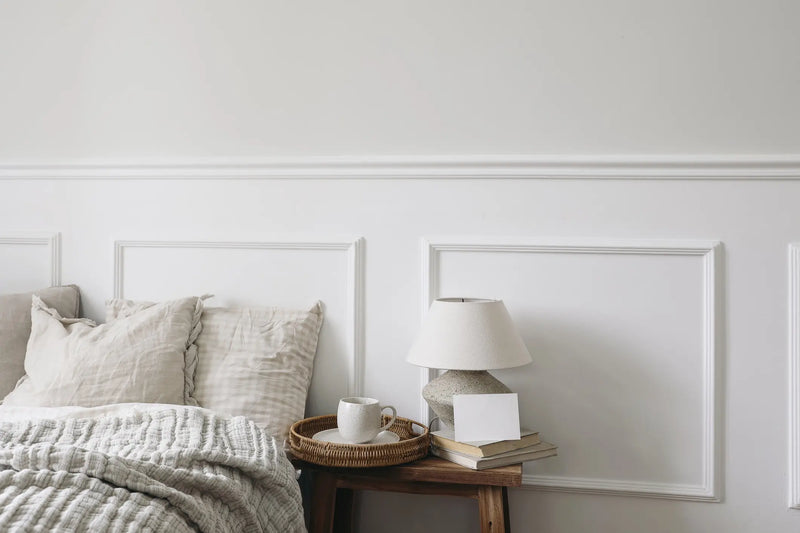
Panelling stiffens the wall, reduces flutter and gives you a wipeable lower section that stands up to family life. Painted in a mid-tone, it also reduces the hard contrast lines that can visually chop a small room. -
Acoustic slat wall with felt backing on one feature wall
This is the big hitter. A properly backed slat wall combines absorption and diffusion, which is why it is so effective behind a sofa or around a TV zone. For kitchens or utility spaces, look for moisture-resistant options. -
Cushions, throws and a fabric lamp shade
Small layers finish the job. They fill in gaps, especially at the side of the room where bare corners tend to ring. -
Optional: draught and gap seals at skirting
Not for absorption, but useful to stop whistling gaps and rattles that draw attention to themselves when the room is otherwise quiet.
Results at a glance
Use the framework below when you recreate the test. If you have measured data, swap the placeholders for your figures.
|
Step |
What changed |
What most listeners notice |
RT60 estimate (fill in) |
|
Baseline |
Bare walls, hard floor |
Clap rings on, speech feels sharp |
[ ] s |
|
Rug + underlay |
Large soft surface |
Footfall softened, first lift in clarity |
[ ] s |
|
Curtains |
Fabric across glass |
Less glare on TV sound, calmer evenings |
[ ] s |
|
Sofa + bookcase |
Absorption and diffusion |
Conversation feels easier |
[ ] s |
|
Half-height panelling |
Stiffened lower wall |
Fewer flutter echoes in tight spaces |
[ ] s |
|
Acoustic slat wall |
Absorb + diffuse |
Biggest improvement to speech clarity |
[ ] s |
|
Finishing layers |
Cushions, throws, shade |
Subtle final polish |
[ ] s |
Note: RT60 is the time it takes for sound to decay by about 60 dB. See the short explainer below.
What RT60 means in plain English
RT60 is a simple way to describe how quickly your room goes quiet after a sound. If a hand clap seems to hang in the air, your RT60 is high. If it fades quickly, your RT60 is lower. Living rooms feel comfortable when sound dies away briskly enough that speech is easy to follow, but not so dead that they feel lifeless. You can estimate RT60 with a free phone app and a clap or balloon pop in the same position each time.
Winners, losers and wildcards
Winners
• Acoustic slat wall with felt backing behind the main seating or TV zone.
• Rug and curtains together, especially in rooms with hard floors.
• Half-height panelling in narrow rooms and hallways where scuffs are common.
Losers
• Thin blinds on their own. They cut light but do little for echo.
• Small scatter rugs. Too little surface area to matter.
Wildcards
• A mixed bookcase that is part library, part display. The irregular surfaces act like a diffuser.
• Fabric wall hangings in a study or home office for an instant softening behind the desk.
How to copy the results at three budgets
Under £150
• A large rug, ideally reaching under the front legs of the sofa.
• Two heavier cushion covers and one throw to soften the side reflections.
• Fit draught seals where skirting meets floor if you feel a noticeable breeze.
Under £500
• Add full-length curtains to cover most of the glass.
• Introduce a single bookcase and vary what is on it.
• Consider half-height panelling on the shortest wall to control flutter.
Under £1,000
• Install a felt-backed acoustic slat feature wall on the TV wall or behind the main sofa.
• Pair with the rug and curtains for the biggest combined lift in clarity.
• Paint panelling and skirting in a durable, wipeable finish to keep maintenance low.
The five-minute echo test at home
-
Stand where you usually sit and record a 10-second sentence on your phone.
-
Clap once and let the sound decay.
-
Lay down a large rug and repeat both recordings.
-
Draw curtains and repeat.
-
Add one change at a time and compare the clips through the same speakers or headphones.
-
If you try an acoustic slat wall, repeat the test and listen for the biggest jump in clarity.
What the experts say
“The biggest gains usually come from simple layers. Pair a good rug and curtains with either half-height panelling or an acoustic slat wall and you will hear the room settle. It is a practical way to make busy family spaces feel more relaxed,” says Adam McGrory, Managing Director at MR Mouldings.
Final word
Start with surface area. A rug plus curtains sets the tone, then add one targeted wall treatment. In most homes, a felt-backed acoustic slat feature wall gives the biggest single improvement. Finish with small layers and enjoy a room that sounds as good as it looks.